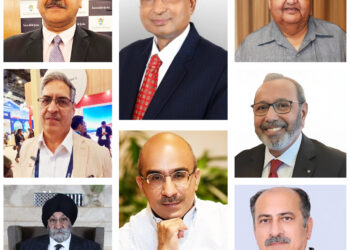
















The responses reflect a dynamic landscape—where uncertainty is driving new travel choices, reshaping demand, and opening emerging opportunities for both inbound and domestic tourism.
Compiled by Priyanka Saxena Ray & Shreya Shimpi
 Vinay Arora
Director, ATG Holidays
As demand for some Middle Eastern destinations softens, Indian travellers are increasingly looking towards Southeast Asia, Japan, and South Korea. Destinations such as Vietnam, Thailand, Indonesia, Singapore, and the Philippines are gaining traction due to their affordability, ease of access, and visa-on-arrival or simplified visa processes. Japan and South Korea are also becoming more popular, especially among younger travellers. Overall, travellers are moving away from quick Gulf trips for now and choosing destinations that feel more stable, diverse, and experience-led. That said, I believe the Gulf will regain momentum once the situation stabilises.
India is well positioned to benefit from both domestic and inbound tourism. Travellers who were earlier considering Middle Eastern trips are now opting for longer holidays within India, especially to destinations like Rajasthan, Himachal, Goa, Kerala, Leh, and the Northeast. This is driving demand for road trips, curated tours, and experience-based travel. On the inbound side, India’s festivals, heritage, spiritual offerings, and cuisine continue to attract travellers from Europe, Southeast Asia, and the US. With the right marketing, India can further strengthen its position as a preferred destination.
We are clearly seeing a shift in traveller behaviour. Travellers are becoming more cautious, especially regarding flights connecting through the Middle East. There is a growing preference for simpler routes, shorter travel durations, and flexible itineraries. If disruptions and higher fares continue, this cautious approach may influence travel planning for some time.

Neil Patil
Co-Founder, COO & CTO, Veena World
The current geopolitical uncertainty is already influencing travel intent, and we expect Indian outbound travellers to pivot towards destinations that offer both perceived safety and strong experiential value. In the near term, Southeast Asia, particularly Thailand, Vietnam, Singapore, and Indonesia, is expected to see increased traction due to ease of access, visa friendliness, and familiarity. Additionally, Japan and South Korea continue to gain popularity for their unique cultural appeal.
From India’s perspective, this global scenario presents a dual opportunity. On the inbound front, India can position itself as a diverse, culturally rich, and value-driven destination, especially for travellers seeking alternative long-haul experiences. Improved air connectivity, simplified visa processes, and curated experiences will be key to unlocking this potential. Domestically, we are already seeing a strong shift toward exploring India more deeply, with destinations like Kashmir, the Northeast, Ladakh, and experiential circuits in Rajasthan and Kerala gaining momentum as travellers prioritise familiarity and flexibility.
In terms of traveller behaviour, there is a noticeable increase in preference for trusted brands, structured group tours, and end-to-end managed holidays. Travellers are planning with slightly shorter booking windows, seeking flexibility, and choosing destinations with a clear perception of safety. Overall, while uncertainty creates short-term shifts, it reinforces the long-term trend of Indians travelling more frequently, but with greater awareness and intent.
Amit Thadani
Director, NIK N AMI Travels
With the current situation affecting parts of the Middle East, we are clearly seeing a shift in demand towards destinations such as Thailand, Vietnam, Bali, Japan, the Maldives, Mauritius, Réunion, and select parts of Europe. These destinations are preferred as they offer a sense of safety, good connectivity, and overall value, which are key decision factors for Indian travellers today.
We are also witnessing strong traction for Singapore, especially after the Disney inaugural sailing. Disney cruises are performing exceptionally well, with clients opting for combinations such as Singapore with Bintan, Batam, or Kuala Lumpur. These combinations are convenient, family-friendly, and offer a diverse range of experiences, driving higher bookings.
India is also benefiting in this phase. Inbound interest remains strong due to India’s diverse offerings across culture, heritage, wellness, and experiential travel. Domestically, bookings have increased significantly, with strong demand for destinations like Kashmir, the Northeast, Kerala, and premium offbeat stays. Travellers are more open to exploring India in depth.
We are also seeing a noticeable shift in behaviour. Travellers are more cautious, preferring stable destinations, flexible bookings, and travel insurance. Planning cycles are shorter, and last-minute bookings are increasing. At the same time, rising airfares and route changes are impacting costs and planning. Despite this, travel sentiment remains positive, with decision-making becoming more mindful and dynamic.

Vansh Arora
Executive Director, Flag Holidays
With demand for some Middle Eastern markets softening, Indian travellers are pivoting towards South and Southeast Asia. Destinations such as Vietnam, Thailand, Maldives, and Singapore are leading bookings, with Vietnam currently topping the list. These markets offer short flight durations, strong value for money, diverse experiences, and improved connectivity, making them immediate preferred choices. Japan is also performing well among premium travellers seeking safety, culture, and high-end experiences, as reflected in continued demand for curated group departures.
India is also set to benefit both as an inbound and domestic destination. Re-routed itineraries from short-haul source markets can drive inbound interest in India’s heritage, wellness, and experiential circuits. Domestically, premium staycations, regional leisure circuits, and curated micro-trips are seeing strong growth, with higher booking values and longer stays.
We are witnessing clear behavioural shifts, including shorter booking windows, greater demand for flexibility, and a preference for lower-risk destinations. Travellers are increasingly choosing curated small-group and luxury experiences, along with comprehensive travel insurance. There is also a noticeable premiumisation trend, with travellers opting for reliable carriers and fully planned itineraries to minimise uncertainty.
Chandni Sharma
Founder & Director, Ascel Group
With demand for parts of the Middle East softening, Indian travellers are shifting towards Southeast Asia, particularly Thailand, Vietnam, Indonesia, and Malaysia, driven by affordability and ease of access. Interest in experiential destinations such as Japan and South Korea is rising, while Europe continues to see steady demand among premium travellers. This reflects a clear focus on value, safety, and meaningful travel experiences.
India stands to benefit strongly from the current global scenario. As an inbound destination, it offers a unique mix of affordability, culture, wellness, and diverse experiences, making it an attractive alternative to traditional markets. Domestically, rising demand for short getaways, spiritual travel, and experiential holidays is driving consistent growth. With improved connectivity and quality offerings, India is well positioned to emerge as a leading tourism hub.
We are seeing immediate shifts in traveller behaviour, with a preference for safer destinations, avoidance of conflict regions, and a tilt towards domestic and short-haul travel. There is also a rise in cancellations, last-minute bookings, and increased price sensitivity. Overall sentiment remains positive, but decision-making is more cautious, flexible, and driven by safety and convenience.
Follow BOTT on LinkedIn, Facebook, Twitter & Instagram
Subscribe BOTT Channels on WhatsApp & Telegram to receive real time updates