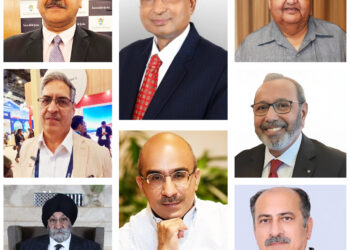


















The responses reflect a dynamic landscape—where uncertainty is driving new travel choices, reshaping demand, and opening emerging opportunities for both inbound and domestic tourism.
Compiled by Priyanka Saxena Ray & Shreya Shimpi

Anil Kalsi
Vice President, TAFI
Leisure to the east and down under will increase. Good times are all about secure environment and affordability with ease of visa or no visa. Vietnam, Thailand, Singapore, Australia, Cambodia, Malaysia and the Philippines will gain market share, subject to fares and Rupee volatility.
The world in turmoil does is not the best setting for growth of tourism. However, Indians are a resilient race and tend to still venture out. Leisure inbound will increase once flights are available and there is a cessation of hostilities. India’s e-visa 2.0 portal is also to be launched later this year and will definitely help inbound tourism. Domestically, tourism depends on new fare levels in view of the increase in fares due to input cost increase of fuel, and drivable distances will see a spurt.
One third of India’s outbound transited through the Middle East. That option being curtailed, fares have spiralled and seat availability is low. Essential travel is taking place as of now. We are hoping peace returns soon so that we can get back to good business.

Tejbir Singh Anand
Managing Director, Holiday Moods Adventure and Past President, ATOAI
As demand for certain Middle Eastern regions softens, I foresee a significant pivot toward Nordic and Scandinavian destinations, as well as Polar expeditions. Indian luxury travellers are increasingly seeking “safe haven” destinations that offer isolation and natural grandeur. Countries like Norway, Iceland, and Finland are gaining traction not just for their stability, but also for their unique experiential offerings such as the Northern Lights and high-end coastal retreats. Furthermore, we are seeing a surge in interest for Antarctica and Arctic cruises, as high-net-worth individuals move away from traditional city-hopping towards “frontier tourism” that feels removed from geopolitical volatility.
India is perfectly positioned to capture “displaced” tourism. For domestic growth, the focus on high-end wellness and spiritual retreats in the Himalayas, along with coastal luxury in destinations like Odisha, offers a serene alternative to international uncertainty. As an inbound destination, India’s diverse geography allows it to position itself as a resilient, year-round hub. By highlighting ultra-luxury boutique properties that avoid a mass-market feel, we can attract global travellers seeking authentic, secure, and culturally immersive experiences.
In recent weeks, there has been a noticeable shift towards shorter booking windows and a preference for private, curated journeys. Travellers are prioritising “purpose over pace,” opting for longer stays in single, high-security locations rather than multi-country itineraries. There is also increased demand for comprehensive travel insurance and a preference for established experts who can provide real-time on-ground support, reflecting a more cautious yet determined traveller sentiment.

Rajat Sawhney
Senior Vice President, ADTOI
Middle Eastern destinations are likely to be completely out of favour due to the impending war. For overseas travel, based on current trends, I see destinations such as Japan, Thailand, Singapore, Malaysia, Vietnam, China, and other Southeast Asian countries gaining strong traction in the coming season. There is particularly high interest in Japan this summer, driven by its unique appeal and growing popularity among Indian travellers.
Tourists are becoming more reluctant to travel overseas, with only those with stronger budgets continuing to travel, largely opting for short-haul destinations in Southeast Asia. Increasing fuel prices and dollar escalation have already led to a rise in airfares, which is directly impacting traveller budgets and decision-making. Inbound tourism is expected to be most adversely affected, with several cancellations already being reported among inbound travellers.
On the domestic front, tourism is expected to be a shining star, with Indian travellers preferring to explore destinations within the country this summer. Hill stations in North India, the Northeast, Goa, and Kerala are likely to emerge as preferred choices.
At present, traveller sentiment remains subdued, with many putting their plans on hold. It is largely a wait-and-watch situation, and final travel decisions are expected to be made once the ongoing geopolitical situation stabilises.

Ajay Prakash
President, International Institute for Peace through Tourism (IIPT)
With the addition of the US/Israel attack on Iran almost a month ago, the level of global hostility today is perhaps at its highest after World War II, and travel & tourism is the first to be affected. It is not just the Middle East—the entire travel sentiment has been impacted. In the short term, destinations in the East and some in Europe might benefit from the summer holiday season, but if this war does not end quickly, all travel will be hit by a combination of high fares due to rising fuel prices, global economic instability, and a general atmosphere of fear and uncertainty. Leisure travel is a discretionary spend, and peace and stability are prerequisites for tourism; many travellers have already put their summer holiday plans on hold.
The summer has traditionally been a lean period for inbound tourism, and the lack of overseas marketing is not helping. While domestic tourism supported the industry during the pandemic, it too is now facing challenges. Many hotels have curtailed menus, and several restaurants have had to shut down due to restrictions on commercial LPG supply.
The world simply cannot afford to let this war continue. India, known through the ages for ahimsa and its high moral standing, must reassert that identity. The travel industry must urge the government to take a leadership role and act as a moral voice, especially for the Global South, to call for an end to this conflict. As Bertrand Russell said, “War doesn’t determine who is right—only who is left.”

Shravan Bhalla
Vice President, OTOAI
We have seen a large number of cancellations due to the Middle Eastern war crisis. As a result, demand for destinations such as Japan, Bali, Kenya, Australia, Sri Lanka, Thailand, and Vietnam has increased. At the same time, there has been an overall decline in passenger movement as clients prefer to adopt a wait-and-watch approach, and many are shifting towards the domestic market, especially as airfares have already reached peak levels.
Due to the current war situation in the Middle East, many travellers feel safer staying within their own country, which is likely to drive domestic tourism growth, along with some short-haul international travel.
We are noticing immediate and measurable shifts in traveller sentiment, booking patterns, and travel preferences. Clients have become more risk-aware and are planning their trips in line with government travel advisories related to safety and disruptions. Booking behaviour has changed significantly, with many travellers preferring to wait and watch. We have also seen some future social events being cancelled or moved to domestic or alternative destinations. Additionally, there is a rise in late or last-minute bookings for short-duration trips.

Ajay Vinayak
CEO, Palomino Hospitality
As demand for some Middle Eastern destinations softens due to current geopolitical tensions, Indian travellers are increasingly pivoting towards stable and visa-friendly regions. Southeast Asia, particularly Thailand, Vietnam, and Indonesia, is expected to lead due to strong connectivity and affordability. We are also seeing a rise in long-haul interest for the USA, driven by the strong diaspora (VFR segment) and premium travellers seeking safety. However, high costs and long visa wait times remain key challenges for the broader market.
India is well positioned to capitalise on these global shifts. As an inbound destination, it can attract travellers seeking high-value, culturally rich alternatives to traditional hubs, especially from markets like Russia and Europe, provided direct connectivity is strengthened. On the domestic front, international uncertainty is boosting demand, with more Indians opting for staycations and drivable, experiential trips within the country. The key challenge will be managing infrastructure pressure in peak destinations.
We are currently witnessing two distinct trends. In the MICE segment, decision-making cycles have slowed, with clients planning early but taking longer to finalise commitments due to caution. In contrast, leisure travellers (FITs) are becoming more impulsive, making last-minute bookings based on real-time safety perceptions and deals. While this trend is keeping business active, it is also making demand patterns more unpredictable.
Follow BOTT on LinkedIn, Facebook, Twitter & Instagram
Subscribe BOTT Channels on WhatsApp & Telegram to receive real time updates