

















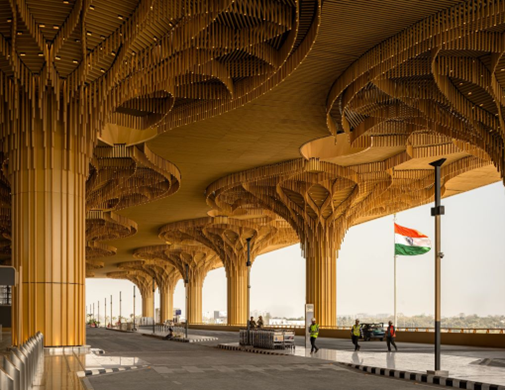
 Airports aren’t usually destinations in themselves, but Assam’s Lokpriya Gopinath Bordoloi International Airport (LGBIA) is changing that.
The recognition comes from Prix Versailles, one of the world’s most prestigious architecture and design awards presented annually at UNESCO Headquarters in Paris. Out of just seven airports selected globally, Guwahati Airport Terminal 2 earned a spot alongside Navi Mumbai International Airport, making it the first time two Indian airports have featured on the list in the same year.
So, what exactly makes Guwahati Airport so special? Here’s why the terminal is earning global acclaim.
- The Design Takes Inspiration from Assam’s State Flower
Most airport terminals begin with functionality. Guwahati’s Terminal 2 began with culture. The architecture draws inspiration from the Kopou Phool, or fox-tail orchid, an iconic symbol deeply associated with Assamese identity and the Bohag Bihu festival. The sculptural columns throughout the terminal mirror the shape of the flower, transforming structural elements into striking design features.
- The Architecture Reflects the Landscape of The Northeast
The terminal’s sweeping roofline is inspired by the Eastern Himalayas and the undulating terrain surrounding the Brahmaputra valley. Inside, earthy tones, natural textures, and bamboo-inspired elements create a warm, immersive environment that feels connected to the landscape and heritage of the region rather than resembling a generic glass-and-steel airport.
- Sustainability Is Built into The Experience
The terminal isn’t just visually impressive; it’s designed to be efficient too. An open-plan layout and strategically placed skylights maximise natural daylight and reduce dependence on artificial lighting. As sustainability becomes an increasingly important factor in global design rankings, Guwahati Airport’s approach demonstrates how functionality and aesthetics can go hand in hand.
- It’s Designed by One of India’s Leading Architecture Studios
Terminal 2 was designed by Nuru Karim’s NUDES (Non-Uniform Design Studio), known for creating projects that blur the lines between nature and contemporary architecture. Often described as India’s first nature-themed airport terminal, the design embraces the symbolism of bamboo and orchids, celebrating resilience, elegance, and the identity of Northeast India.
- It’s Redefining What an Airport Can Represent
For decades, Guwahati Airport has served as the gateway to Northeast India. But this recognition elevates it beyond being just a transit hub. The terminal represents the culture, ecology, and aspirations of the region, creating a powerful first impression for travellers arriving from across India and the world. It signals a broader shift in how infrastructure can tell stories and reflect regional identity. Guwahati Airport is no longer just a place travellers pass through. It is becoming a reason to stop, look around, and stay a while.
This recognition is not a one-off. Guwahati Airport Terminal 2 also received the International Architectural Award 2025 from The Chicago Athenaeum, reinforcing its growing reputation among global design communities. For a city often viewed simply as an entry point to the Northeast, this accolade marks a significant shift — positioning Guwahati as a destination that is as architecturally compelling as it is culturally rich. With momentum building across consecutive award cycles, Guwahati Airport looks set to keep collecting global recognition, and to pull more travellers toward Northeast India as a destination in its own right.
Follow BOTT on LinkedIn, Facebook, Twitter & Instagram
Subscribe BOTT Channels on WhatsApp & Telegram to receive real time updates