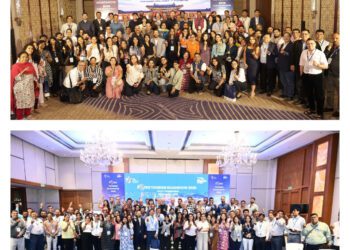










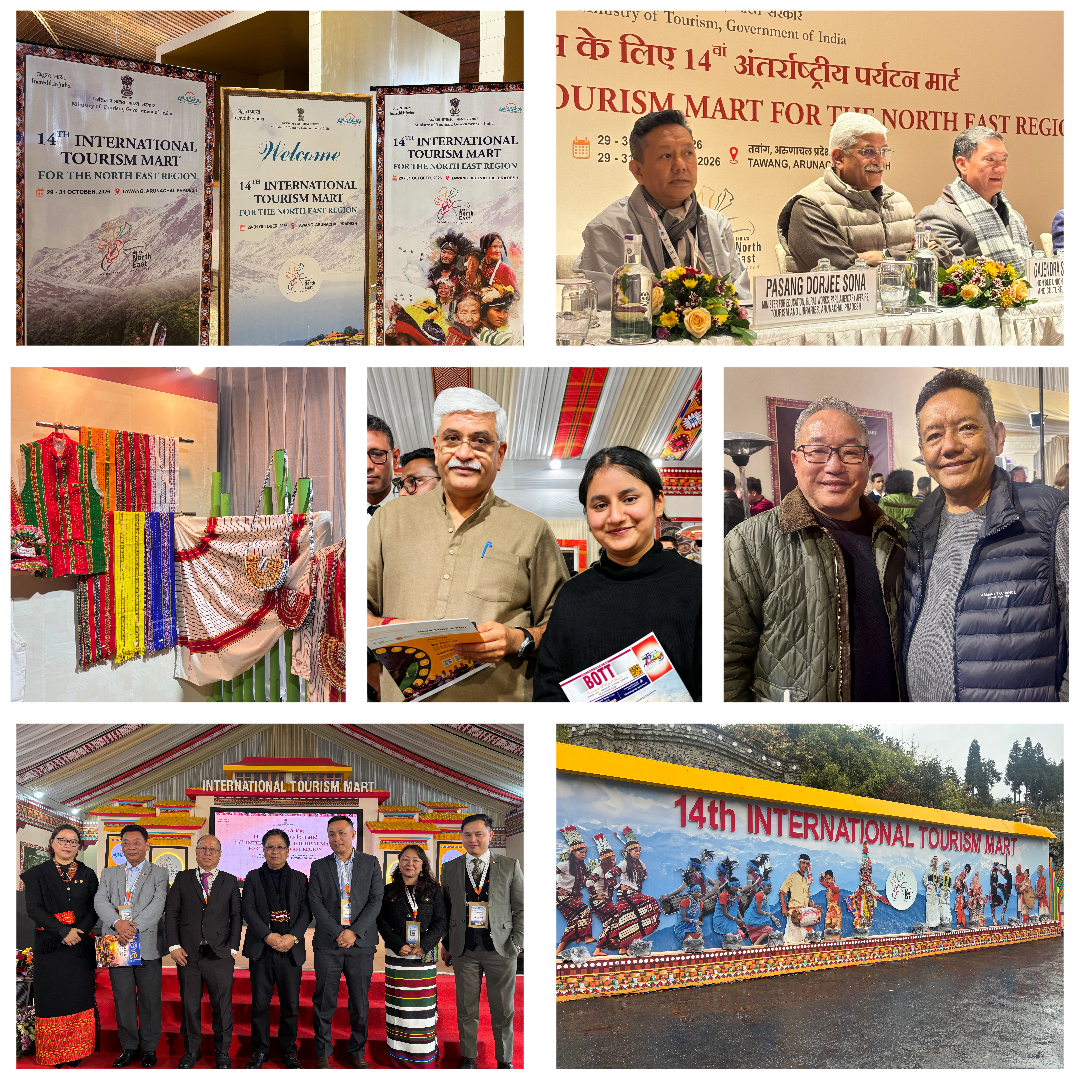
 Organised by the Ministry of Tourism, Government of India, in association with the Government of Arunachal Pradesh and the seven other North Eastern States, the three-day conclave brought together policymakers, industry leaders, and global travel buyers to chart a sustainable, experience-driven
Held from October 29 to 31, the Mart recorded its highest-ever international participation, hosting 43 international buyers from 22 countries, including the United States, the United Kingdom, Japan, Australia, France, Germany, South Korea, and the UAE, alongside 42 domestic buyers from 16 States and Union Territories and 81 sellers. Over three days, the event facilitated 1,580 structured business-to-business (B2B) meetings, forging commercial partnerships and opening new tourism circuits across Arunachal Pradesh, Assam, Manipur, Meghalaya, Mizoram, Nagaland, Sikkim, and Tripura.
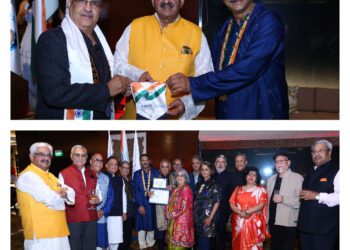
Inaugurating the event alongside Union Ministers of State Shri Suresh Gopi and Dr. Sukanta Majumdar, and Sikkim Chief Minister Shri Prem Singh Tamang, Union Minister for Tourism and Culture Shri Gajendra Singh Shekhawat underscored North East’s untapped potential in adventure, nature-based, and concert tourism.
Union Tourism Minister noted that domestic tourist visits to the region surged by roughly 58 per cent, rising from 95.65 lakh in 2019 to 1.51 crore in 2025. To sustain this momentum, the Centre has sanctioned over ₹3,060 crore across key infrastructure schemes, including Swadesh Darshan 1.0 and 2.0, PRASHAD, SASCI, and Challenge Based Destination Development, alongside ten dedicated tourism air routes under the UDAN scheme.
Arunachal’s pitch for responsible tourism growth
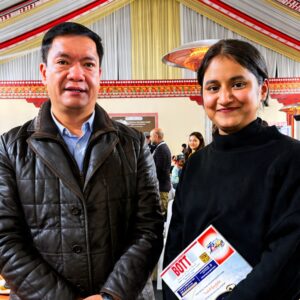
For host state Arunachal Pradesh, the Mart’s return to Tawang, which last hosted the second edition in 2013, carried deep symbolic and economic weight. Welcoming global delegates, Chief Minister Shri Pema Khandu said, “The return of ITM to Tawang after 13 years makes this occasion even more significant. It is a recognition of the growing tourism potential in our state. Arunachal Pradesh is an experience of nature in its most magnificent form, a living repository of ancient tradition, and a meeting point of diverse cultures.”
Emphasising the balance between commercial growth and ecological stewardship, Khandu added, “Our cultural diversity is our greatest asset. Our endeavour is to translate this extraordinary natural and cultural wealth into sustainable economic opportunities for our people while preserving our unique heritage and pristine environment. Let us build a tourism ecosystem that is professional yet welcoming, commercially viable yet environmentally responsible, globally connected yet deeply rooted in our local culture.”
Connectivity push and investment potential
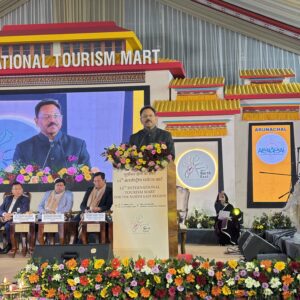
While reaching high-altitude destinations like Tawang still involves a full day road journey from Guwahati via Dirang, technical sessions at the Mart highlighted how rapid infrastructure expansion is steadily bridging connectivity gaps. Delivering the keynote address, Shri Suman Billa, Additional Secretary and Director General, Ministry of Tourism, pointed out that the North East’s airport network has expanded from nine to 17 since 2014, operationalising 90 new routes, while national highways grew from 10,905 km to 16,207 km.
Placing the region’s growth within India’s broader tourism boom, where domestic visits reached 4.34 billion in 2025 at an 11 per cent CAGR, supporting 89 million jobs and contributing 5.22 per cent to national GDP, Billa framed the North East as India’s next major investment frontier. “The North East only receives 0.43 per cent of India’s total domestic tourists and 1.17 per cent of foreign arrivals, which stood at 2.4 lakh—up 10.43 per cent over the previous year,” he noted. “Even though it is growing robustly, it is growing on a very small base. The North East is truly starting now, and there is a very long runway to grow. Those who invest in it and come to the party early will reap the benefits for a very long time,” he added.
Billa also praised states like Sikkim and Assam for leading the way in community-owned homestays, noting that strong grassroots participation ensures travellers get authentic cultural experiences while keeping economic prosperity within local communities.
Policy deliberations culminated on October 30 with the Regional Meeting of Tourism Ministers of the North Eastern States, chaired by Shekhawat. Ministers reviewed thematic presentations on Dekho Apna Desh 2.0, designed to redistribute footfall toward lesser-known destinations, and the National Digital Tourism Stack (NDTS), which aims to bring local homestays, guides, and entrepreneurs onto a unified digital booking ecosystem. Discussions also focused on harnessing the live concert economy and streamlining Restricted Area Permit (RAP) and Protected Area Permit (PAP) processes to ease foreign tourist entry without compromising security.
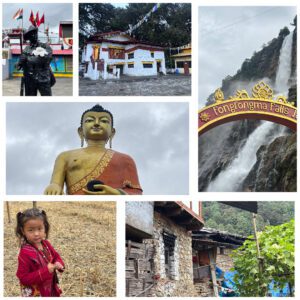
Beyond the conference halls, delegates experienced the region’s living heritage through the newly inaugurated North East Bazaar, vibrant cultural showcases, and curated excursions to Tawang Monastery, Tawang War Memorial, Urgelling Gompa, Buddha Park, PTSO Lake, and Shernup Village. Following the conclusion in Tawang, international buyers departed from Guwahati on November 1 for post-Mart familiarisation (FAM) tours across the North East, carrying forward the momentum generated in the mountains.
Follow BOTT on LinkedIn, Facebook, Twitter & Instagram
Subscribe BOTT Channels on WhatsApp & Telegram to receive real time updates