










San Francisco is home to landmark architectural wonders, world-class attractions, rich history, a vibrant art and culture scene, and a global appeal that makes it one of the world’s most compelling destinations. Moreover, if you are travelling to California for the FIFA World Cup 2026, San Francisco’s proximity to one of the stadiums presents the perfect opportunity to touch down upon some of the most iconic spots to experience the essence of the city as a first-time visitor.
Golden Gate Bridge
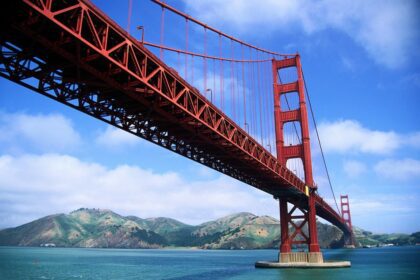
Golden Gate Bridge, one of the seven wonders of the modern world, is perhaps San Francisco’s most famous landmark, opened in 1937. The 1.7-mile-long bridge, anchored by towers that reach 746 feet skyward, was once taller than any building in San Francisco. The Golden Gate Bridge brought the communities of San Francisco and Marin counties closer together and became one of the most driven sections of historic U.S. Route 101, which stretches from Los Angeles north to San Francisco and beyond. It is equally popular among hikers and cyclists and is the main attraction for runners partaking in the many local annual foot races. Also, one of the most photographed architectural marvels in the world, some of the best viewpoints to catch a stunning glimpse of the Golden Gate Bridge include an under-the-bridge angle from Fort Point at sunrise, an outside-the-gate view from Baker Beach, or a spectacular sight of the architectural wonder during sunset from Mile Rock Beach.
Alcatraz
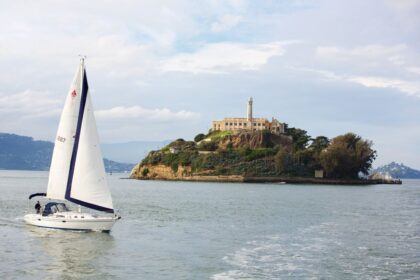
Located in San Francisco Bay, approximately 1.25 miles from Fisherman’s Wharf, Alcatraz has a rich past as the site of the first lighthouse in the Western United States, later converting into a federal penitentiary from 1934 to 1963, housing famous convicts such as Al Capone and George ‘Machine Gun’ Kelly. Now, this once infamous prison island is part of the Bay Area’s 80,000-acre Golden Gate National Recreation Area and one of the city’s most popular attractions. A visit to the island includes a tour of the cell house, where visitors can see how the prisoners lived. Although the last inmates were transferred off the island in 1963, the main prison block with its steel bars, claustrophobic (9 x 5-foot) cells, mess hall, library and ‘dark holes,’ is still structurally intact. Visitors can also explore the historic gardens, originally planted by residents of the island and now lovingly restored, offering a surprising contrast of colour and life against the stark backdrop of the prison. To get there, take an Alcatraz City Cruises ride from Pier 33 and explore a treasure trove of history through guided tours, night tours, exhibits, and more.
 Coit Tower
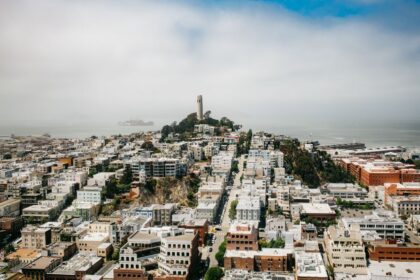
Perched atop Telegraph Hill in Pioneer Park, the 210-foot Coit Tower has long been a defining feature of San Francisco’s skyline and holds much pop culture relevance, having been featured multiple times in movies such as Dr Doolittle and Sister Act 2: Back in the Habit. The 210-foot tower was built in 1933 and is a standing legacy of San Francisco patron Lillie Hitchcock Coit. The ground floor lobby is adorned with a series of fresco murals by some 30 local artists, depicting life in 1930s San Francisco, which stirred controversy back in the day. The artists and murals were funded by President Roosevelt’s New Deal pilot art program, the Public Works of Art Project. Today, they remain as a colourful, insightful look back to a difficult time in American history that visitors can explore through guided docent tours.
Lombard Street
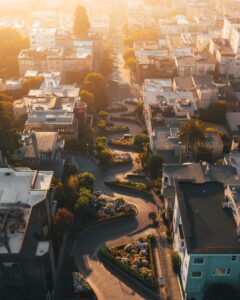
Often referred to as the ‘Crookedest Street in the World,’ Lombard Street is one of San Francisco’s most photographed landmarks. Every year, millions of visitors walk or drive down its eight sharp hairpin turns. Surrounded by Russian Hill mansions and perfectly manicured landscaping and flowers, it is also one of the city’s most scenic streets. It may look treacherous, but Lombard Street’s switchbacks were built to increase the safety of the street as the natural steep grade was thought to be too dangerous. In the 1920s, a property owner suggested creating a series of switchbacks, which not only added to the street’s scenic appeal but made it safer for pedestrians. Technically speaking, the most crooked section of the street belongs to Vermont Street between 20th and 22nd streets on Potrero Hill. The Bring Your Own Big Wheel Race, held every Easter Sunday, features people racing on big-wheeled plastic bikes, starting on Lombard St. before moving to Vermont St. Lombard Street is also close to numerous other San Francisco attractions such as North Beach, Chinatown, and Fisherman’s Wharf, as well as, attractions such as the San Francisco Art Institute which are all within walking distance.
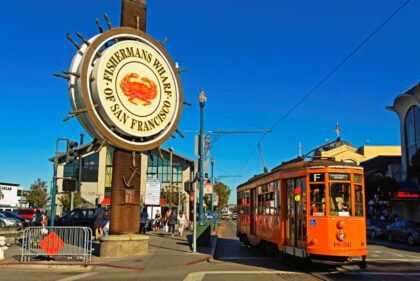
Fisherman’s Wharf
Fisherman’s Wharf is one of the city’s most vibrant and visited destinations, capturing San Francisco’s lively waterfront culture through its bustling streets, family-friendly attractions, and renowned dining scene. Stroll along Pier 39, dotted with restaurants, souvenir shops, street performers and attractions or catch a bird’s eye view of the city and the bay by taking a spin on the SkyStar Observation Wheel. Stop by the Aquarium of the Bay for an unforgettable encounter with local marine life. Experience the excitement of a roller coaster and the fun of interacting with film itself at the 7D Experience at Pier 39, an interactive, 3D ‘dark ride’ featuring state-of-the-art digital theatre. The Flyer at Pier 39 is an immersive, 3D flying theatre that offers a stimulated scenic sensation of riding through San Francisco’s most iconic and breathtaking landmarks. Food is a central part of Fisherman Wharf’s vibrant community. Waterfront restaurants at Pier 39 include family-friendly dining at Wipeout Bar & Grill, BBQ at Pier Market, and elegant dining with breathtaking views at Fog Harbor Fish House. Restaurants like Scoma’s and The Franciscan Crab Restaurant serve fresh seafood, while Ghirardelli Square offers shopping, dining and sundaes, and The Buena Vista Café, famous for its legendary Irish coffee.
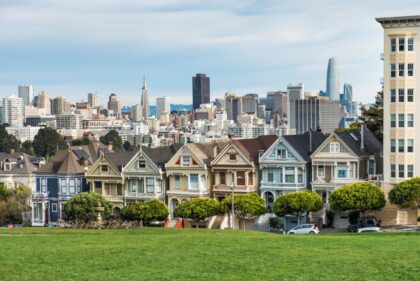
Painted Ladies
Along the eastern side of Alamo Square Park is one of the most iconic and most photographed sights in San Francisco. These pastel-coloured homes, built between 1892 and 1896, standing shoulder-to-shoulder on the gentle slope of Steiner Street, are called the Painted Ladies. Also known as ‘postcard row’ for their scenic beauty, these Victorian homes (still occupied by locals) are a beautiful reminder of the San Francisco of old, while the gleaming downtown skyline of new San Francisco shimmers in the distance. The Painted Ladies sit within proximity to many attractions in the city, from shopping on Divisadero Street to dining in Fillmore and art at the Asian Art Museum, and more.
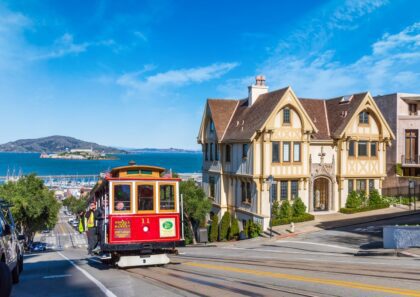
Cable Cars
No visit to San Francisco is complete without riding its iconic San Francisco Cable Car System. These historic vehicles are the world’s last manually operated cable car network—streetcars pulled by cables running beneath the road. These right-out-of-the-Smithsonian cable cars were named a national historic landmark in 1964. Refurbished and equipped with new tracks, cables, turnarounds and cable propulsion machinery, they operate much as they did on Aug. 2, 1873, when Andrew S. Hallidie guided the first car down Clay Street. Once upon a time, cable car lines serviced the entire city, but today, only three lines remain, which connect some of San Francisco’s most popular neighbourhoods. Visitors interested in the system’s history can explore the San Francisco Cable Car Museum, where the massive wheels and machinery that power the network are still on display.
Follow BOTT on LinkedIn, Facebook, Twitter & Instagram
Subscribe BOTT Channels on WhatsApp & Telegram to receive real time updates
⑧-2-350x250.jpg)