

















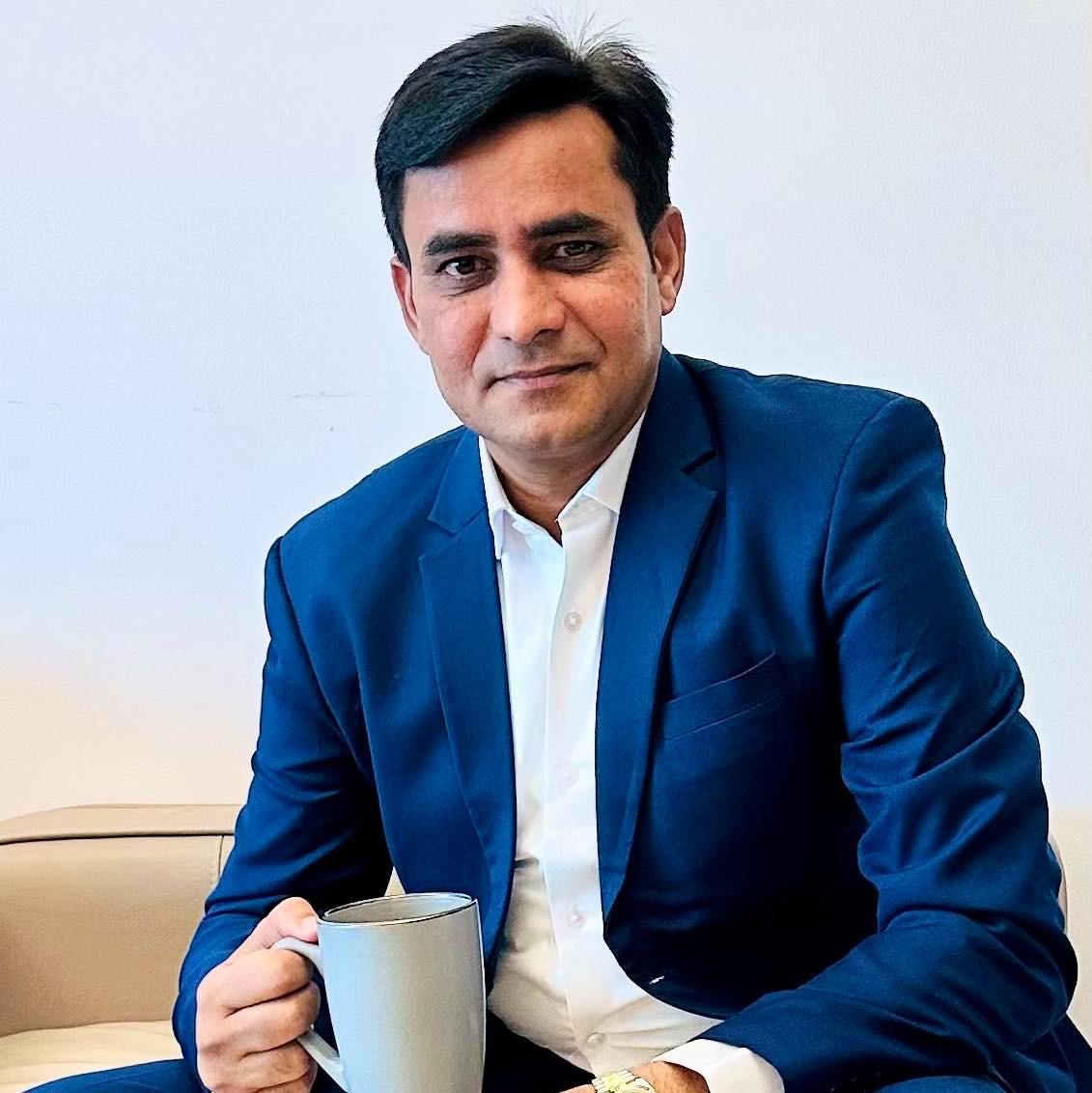
Dinesh Yadav, Founder & Managing Director, Fine Acers
The rising convergence between the hospitality and real estate industries is also leading to a number of alternative ways for ownership, which includes branded residences and sale-leaseback options, wherein an attempt is made to combine the elements of lifestyle ownership with professional property management. On the other hand, investors themselves are becoming increasingly selective, focusing not only on the bottom-line numbers, but also taking into account other parameters like location, quality of management, the strength of the brand and the fundamentals of the business itself. In this regard, we spoke to Dinesh Yadav, Founder & Managing Director of Fine Acers.
Q1. What is currently making hospitality-led real estate attractive to investors in India?
Dinesh Yadav: There is a convergence of several factors. India’s domestic travel market is expanding, premium consumption is increasing and the supply of quality hospitality assets in several destinations remains relatively constrained. At the same time, investors are increasingly looking beyond conventional residential real estate for assets that can combine lifestyle utility with an income-generating component.
We have observed that, India’s hotel investment market rose 67% in 2025 to US$567 million, while institutional capital and private equity together accounted for 35% of transactions and HNIs and family offices accounted for another 27%.
This indicates that hospitality is attracting a wider range of capital. However, investors are becoming more selective. Location, operator quality, brand strength, demand visibility and the underlying economics of the asset are increasingly important when evaluating hospitality-linked real estate.
Q2. Are investors increasingly looking at branded residences as an alternative to conventional second homes?
Dinesh Yadav: There is certainly growing interest in the category, but I would describe it as an evolution rather than a replacement for conventional second homes. A branded residence can appeal to someone who wants ownership but does not want to personally manage a holiday property.
The global numbers demonstrate how rapidly the category is developing. Knight Frank estimates that branded residence schemes could reach 1,019 globally by 2030, compared with 611 schemes currently.
The important consideration is that buyers have different motivations. Some primarily want a lifestyle asset; others may want rental participation; and some may value the brand and professionally managed services. A successful project therefore needs clarity about its target buyer instead of trying to combine conflicting propositions.
Q3. Rental programmes are becoming an important part of branded residences. How should investors evaluate the balance between lifestyle and income?
Dinesh Yadav: The first step is to understand what the property is actually designed to be. If it is positioned as a private luxury residence, excessive rental activity can potentially compromise the residential experience. If it is designed from the beginning as a hospitality-led investment product, rental participation may be much more central to its proposition.
A recent Hospitality Investor discussion highlights this distinction. It notes that rental programmes can help owners offset purchase costs and create an income stream, but also cautions that the model needs to remain aligned with the positioning of the residence. In projects offering rental pools, participation can exceed 70%, demonstrating the appeal of professionally managed rental programmes.
For investors, the key is therefore to examine the actual contractual structure, management arrangements, costs and revenue-sharing mechanism rather than evaluating the proposition purely on headline returns.
Q4. Fine Acers has recently expanded its footprint with a new office in London and another in Gurugram. How do these two markets fit into the company’s broader expansion and business strategy?
Dinesh Yadav: Our expansion into London and Gurugram reflects two complementary priorities for Fine Acers, strengthening our international investor network while deepening our presence in one of India’s most important real estate markets. The London office is designed to serve as a strategic hub for business development, investor engagement and international collaborations, particularly as interest grows among the Indian diaspora and global investors in India’s hospitality-led real estate opportunities.
At the same time, Gurugram gives us a stronger base to engage with investors across Delhi-NCR and North India. We see significant potential in this market and expect the Delhi-NCR business to contribute more than ₹100 crore in revenue. The two expansions therefore serve different but connected objectives London strengthens our global reach, while Gurugram strengthens our domestic investor and business network. Together, they support our ambition to build Fine Acers into a broader hospitality and real estate platform with a strong presence across key Indian and international markets.
Q5. What role do global hospitality brands play in influencing investor and traveller confidence in resort residences?
Dinesh Yadav: A recognised hospitality brand can bring operating expertise, established service standards and consumer familiarity, which can be particularly valuable in a resort environment. But the brand itself is not a substitute for a sound project.
The broader market shows why brands are becoming increasingly relevant. JLL reported that 51,647 branded hotel keys across 424 hotels were signed in India during 2025, up 23% year-on-year, with 71% of those signings concentrated in Tier II and III cities.
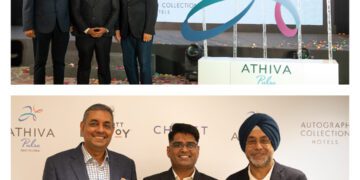
For a resort residence, the combination of destination, product quality, professional operations and brand standards can create a more structured ownership experience. Our collaboration with Wyndham Hotels & Resorts reflects this hospitality-led approach, while our London and Gurugram expansion is intended to bring us closer to investors and partners in international and North Indian markets.
Q6. Looking ahead to 2026 and beyond, what will separate sustainable hospitality investments from short-term opportunities?
Dinesh Yadav: I think investors will increasingly distinguish between a property that is simply marketed as a hospitality investment and one that has strong underlying hospitality fundamentals. Demand visibility, destination connectivity, quality of operations, realistic financial assumptions and the ability to maintain the asset over the long term will matter more than promotional return projections.
The fundamentals are encouraging. JLL expects global hotel investment activity to strengthen in 2026, supported by improving capital markets, travel demand and investor confidence. In India, HVS Anarock also points to domestic travel, infrastructure development and the expansion of tourism into emerging markets as structural drivers.
For the sector, the opportunity is therefore not simply to build more resorts. It is to create assets that remain relevant to travellers while also making sense from an ownership and operational perspective. That alignment between traveller demand, hospitality performance and investor expectations will ultimately determine which models have staying power.
Follow BOTT on LinkedIn, Facebook, Twitter & Instagram
Subscribe BOTT Channels on WhatsApp & Telegram to receive real time updates