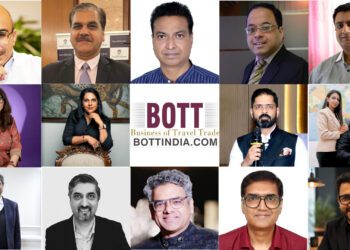















As source markets evolve and international travellers seek more immersive, seamless and diverse experiences, senior inbound tourism leaders share their assessment of current trends and outline what India must do to strengthen its position in the global tourism marketplace.
Priyanka Saxena Ray
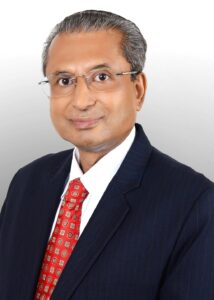
Pronab Sarkar,
MD, Swagatam Tours
As an inbound tour operator, I would say that 2025–26 was a very difficult year. The Pahalgam incident, the continuing Ukraine–Russia war and global uncertainty led to many confirmed bookings being cancelled. The tourist season did not pick up from the USA and European markets, while higher airfares and reduced flight frequencies to and from India further affected normal tourist traffic. Overall, we received approximately 25 per cent fewer tourists compared to the previous financial year. The present global situation also remains uncertain due to the ongoing Middle East conflict, fuel costs and rising travel expenses, which are affecting holiday decisions.
To improve inbound tourism, I believe India needs much stronger promotion and marketing overseas. Tourism offices abroad remain closed, promotional activities are limited and international exhibition participation is being considered only case by case. We need clear long-term targets, stronger global promotion, simple visa applications in multiple foreign languages, clean tourist monuments, hygienic surroundings and better last-mile connectivity. Unless timely action is taken, achieving ambitious tourism targets will remain difficult.
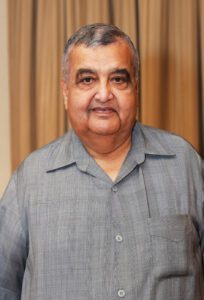
Rajiv Mehra
Immediate Past President, IATO
India’s inbound tourism performance in 2026 is showing steady but still below-potential recovery. The strongest opportunities continue to lie in the US, UK and Europe, along with Australia, Japan, Southeast Asia and the Middle East. High-value segments such as wellness, spirituality, luxury, MICE, adventure, Buddhist tourism and experiential travel are particularly promising. International travellers are increasingly looking beyond conventional sightseeing and want authentic, immersive, sustainable and personalised experiences, seamless digital services, better connectivity and value for money. India’s culture, cuisine, wildlife, wellness traditions and spiritual heritage give us a strong competitive advantage, but the challenge is to convert interest into longer stays, repeat visits and higher spending.
To significantly increase India’s global tourism share, I believe we need a coordinated national strategy combining connectivity, facilitation, infrastructure and aggressive international marketing. Visa processing must become faster and simpler, while direct air connectivity should expand. We must develop world-class destinations with strong last-mile connectivity, better amenities and cleaner public spaces, while promoting wellness, cruises, Buddhist circuits, wildlife, MICE, luxury and rural tourism. Government and industry must work together on one measurable national inbound tourism strategy.

Zia Siddiqui
Managing Director, Alliance Hotels & Resorts
India’s inbound tourism performance in 2026 was encouraging till the end of February, with strong potential from traditional markets such as the UK, USA, Europe, Australia and the Middle East. However, after the war started in the Middle East, inbound business slowed down, and the coming season is also not looking very promising as many operators use Middle Eastern airlines because of their price competitiveness. If the war ends, India can emerge strongly among Asian markets. Leisure, MICE, wellness, luxury, experiential and spiritual tourism are showing momentum, while travellers are increasingly looking for seamless experiences, authenticity, personalised service, sustainability, digital convenience and value for money.
To increase India’s share of global inbound tourism, the Government and industry need a clear, jointly owned short- and long-term Destination Marketing Plan. Alongside connectivity, visas, infrastructure and destination development, we must strengthen micro and small tourism operators. We should also revive the “Festival of India” concept in key international markets and aggressively explore emerging and non-traditional source markets. The objective should be to move from destination promotion to destination demand creation, with government and industry working as one team.
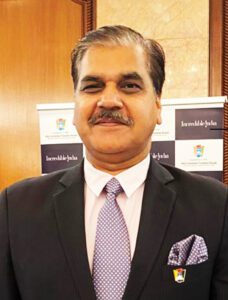
Amaresh Tiwari, CIS
MD, A.T. Seasons & Vacations Travel and CEO, Meetings & Incentives World
India’s inbound tourism is at an important inflection point. While global inbound arrivals have recovered strongly from the pandemic, India still captures only a modest share of global tourism. Early 2026 indicators suggest gradual improvement, but I believe the opportunity is far greater and we are missing valuable time to increase our share. Our strongest source markets remain the United States, UK, Europe, Australia, Canada and neighbouring Asian markets, while Southeast Asia, the Middle East and emerging markets such as Brazil, Mexico, Argentina and Colombia offer substantial growth potential. Travellers are increasingly seeking authentic, experiential, wellness, spiritual, culinary, adventure and sustainable tourism rather than conventional sightseeing of forts and palaces.
To significantly increase India’s global share, I believe we need a coordinated “Ease of Travel” strategy. Faster and simpler visas, greater international air connectivity, improved last-mile connectivity, world-class public amenities, multilingual digital services and seamless tourist facilitation are essential. India must move from promoting destinations to selling experiences, supported by professional DMOs, stronger public-private partnerships, market-specific campaigns, tourism skills and targeted international marketing. The objective should be clear: more visitors, longer stays, higher spending and wider geographical dispersal of tourism benefits.

Homa Mistry
CEO, Trail Blazer Tours India
India’s inbound tourism performance in 2026 is definitely low compared to previous years, largely due to the continuing geopolitical situations, which do not seem to be subsiding. This uncertainty has affected traveller confidence and planning, particularly for long-haul travel. Another major concern is the exorbitantly high cost of flight tickets to and from India, which makes the destination less competitive compared to several other countries. In such a situation, there is only so much the industry can do until airfares become more reasonable and global conditions stabilise.
India is a great tourism product and has everything required to attract international travellers, from culture and heritage to wellness, spirituality, cuisine, wildlife and diverse experiences. What is required now is greater ease of getting visas and much stronger overseas marketing. The visa process should be simple, quick and traveller-friendly, while India needs sustained visibility in key international markets. Government and industry must work together to promote the destination more aggressively and consistently so that India remains top-of-mind for international travellers.

Prateek Hira
President & CEO, Tornos and Director, UnDMC
Since COVID-19, India has struggled to recover its previous arrival figures, and 2026 has been no different, yielding muted results and leaving the inbound industry in a somber mood. However, the trade remains resilient and has increased efforts to attract both high-volume and high-value tourism. With minimal tourism promotion from the Government of India abroad, individual states have taken the lead through international travel marts, advertising and roadshows. We remain hopeful about traditional source markets such as the UK, US and parts of Europe, while Southeast Asia, Japan and the reopening of China present strong opportunities. Travellers today are also looking beyond standard sightseeing for niche, curated and memorable experiences.
India has made significant strides in infrastructure and enjoys strong global recognition, but inbound tourism remains highly competitive. To increase our global share, we need a structured, research-driven and targeted marketing strategy, including a renewed “Incredible India” campaign or a similar initiative to reposition India globally. Tour operators must develop niche itineraries highlighting India’s unique offerings, while tourism trade associations should move beyond working in silos and adopt a more unified, collaborative approach. Government and industry must work together with greater clarity and consistency to achieve meaningful growth.

Rajeev Kohli, CIS, CITP, DMCP
Joint Managing Director, Creative Travel
India’s inbound tourism performance has been quite lackluster, to say the least. Whatever we re
-getting as a destination is organic and is from interest of people who want to come, but there has been no growth, no interest in the destination overall. No matter where one travels to in overseas markets, the answer is simply the same. The steps needed to increase or even grab our share of international tourism arrivals is no mystery. Everybody, no matter where you are in the Indian tourism ecosystem, knows that the only single answer is international marketing. Even our Ministry of Tourism recognises and accepts that.
Unfortunately, the Ministry of Tourism simply has not been given the funds nor the power to do anything by the larger government. Even if a portion of the funds they do have was diverted to some sort of overseas marketing, it would make a big boost. Spending a small sum of 50 crores on a series of smart homegrown social media posts, Al videos, and the likes, that can be distributed to the private sector for larger circulation would tremendously benefit our sales efforts.
As of now, we have been completely absent from international markets for the last few years.
Selling travel is like selling any consumer product, be it shoes, be it phones, be it cars. If you’re present, you have to be visible, and only those brands that are visible capture any consumer interest.
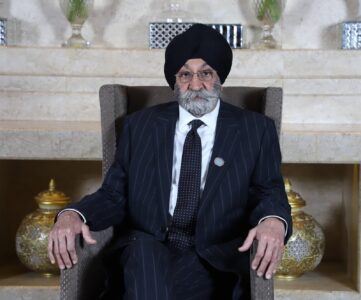
P S Duggal
Executive Director, Minar Group
India’s inbound performance in 2026 has shown encouraging movement, but the larger opportunity still remains ahead of us. Demand is returning unevenly across markets, and the strongest growth is coming from travellers who are looking beyond conventional touring and are willing to spend more for relevance, comfort and depth.
What is becoming increasingly clear is that India is benefiting from a shift towards well-ness, wildlife, heritage, spiritual travel, private family journeys and more personalised experiential itineraries. The traveller today is less interested in simply “covering” India and more interested in experiencing a part of it meaningfully.
India needs stronger air connectivity, easier visa access, better last-mile infrastructure and more consistent international destination marketing. But equally important is how India is positioned. We cannot continue to sell one familiar version of the country to every market. After 34 years in inbound tourism, our view at Minar is that India’s next phase of growth will come from sharper market understanding, better storytelling and a more seamless visitor experience, while preserving the complexity and character that make India extraordinary.
Follow BOTT on LinkedIn, Facebook, Twitter & Instagram
Subscribe BOTT Channels on WhatsApp & Telegram to receive real time updates