
















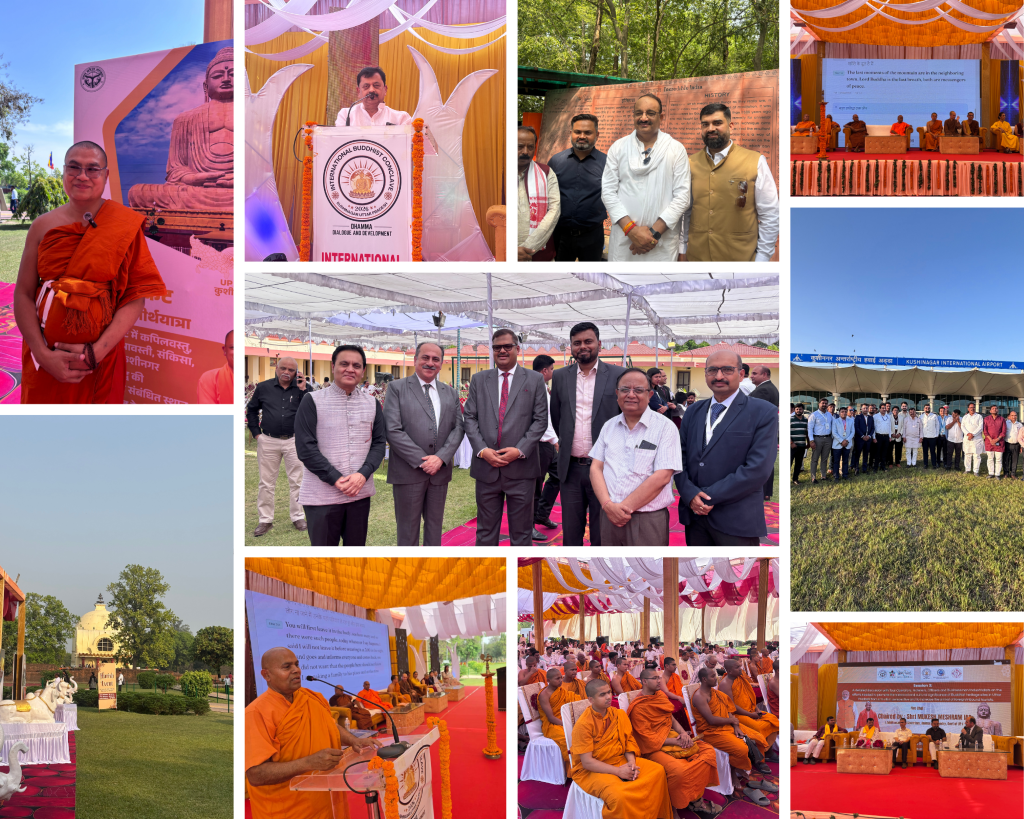
 The event highlighted Kushinagar’s growing significance on the global Buddhist tourism map. Through insightful discussions and on-ground experiences, the conclave aimed to position the destination as a key spiritual and cultural hub, while reinforcing its strong potential for inbound tourism growth.
Somya Deep
I landed in Kushinagar with a bag full of excitement and left with a heart full of compassion. As any discerning traveller would say, the city is serene, calm, and a perfect escape. But Kushinagar is a lot more. It is a place where monks inspire a slow life, and where Buddha’s Middle Path is a roadmap for the future.
The Kushinagar International Buddhist Conclave transformed this quiet pilgrimage site into a global stage. Walking through the venue, the air was filled with the chants of monks and on the other hand with the strategic murmurs of delegates from many countries. More than 2,000 followers of Buddha gathered here, proving that Kushinagar is a beacon in international spiritual destinations.
As Dinesh Pratap Singh, Minister of State, Horticulture, Agricultural Marketing, Agricultural Foreign Trade & Agricultural Export, Government of Uttar Pradesh, noted during the event, “Bhagwan Buddha gave a message to the whole world which is still relevant after 2500 years. This international Buddhist conclave will send a message beyond the seven seas that the middle path is the best path.”
But are international travellers really coming to Kushinagar? The answer is a yes, but with a condition of untapped potential.
Building the Buddhist tourism economy
One of the primary challenges discussed at the Conclave was the day trip phenomenon. As Ahmad Maaz, Managing Director, Royal Tours Group, pointed out, many visitors currently treat Kushinagar as a stopover. “My perception is that all guests should stay a minimum of two nights. Kushinagar is an international fame name for the market for Buddha. It is a popular Buddhism tourism destination and it comes with the responsibility of its promotion as a Buddhist circuit and tourism destination,” he said.
To transition from seasonal to year-round tourism, the local administration and private sector are making big moves. The spiritual triangle of Gorakhpur, Varanasi, and Ayodhya is being promoted to link Kushinagar with other major hubs. Infrastructure is catching up. The city currently hosts several local hotels; the hospitality landscape is shifting. Taj Hotels is planning a property in the region within the next two years.
The scope of development
Mahendra Singh Tawar (IAS), District Magistrate, Kushinagar, outlined ways to revitalise the region. He suggested, “Using the Buddhist platform to invite Foreign Direct Investment (FDI). Ensuring the community benefits from the tourism economy and making the residents stakeholders in the city’s growth.” The DM’s vision includes a Buddha Art and Craft Center, an experience hub that would commercialise Buddhist merchandise. It resonates with the fact that Buddha statues and motifs have become universal symbols of peace and home decor. By creating a centre for stonework, sculptures, and linguistic schools, Kushinagar also aims to become a skill centre for the world.
Prateek Hira, Chairman, IATO UP Chapter bringing the energy at the gathering, claimed, “The government has been very serious about promoting Kushinagar. We have a modern airport, and as part of this Buddhist conclave, we are working with airlines like Air India, Indigo, and SpieceJet to improve connectivity and bring in more passengers directly from Buddhist nations.”
Designed as a Green Chute project, the airport is a state-of-the-art facility featuring five runways, including one in isolation. While the airport currently awaits full-scale commercial operations, officials expect major traffic to flow from hubs like Delhi and Bangalore.
Rajat Sawhney, Senior VP, ADTOI, highlighted the significance of this gateway, “The Green Chute Airport project will open floodgates for the Buddhist circuit, attracting people from Southeast Asia and regional tourists.”
Hira further added, “Pilgrimage is a compulsive exercise in Buddhism. We can attract pilgrims from Cambodia, Thailand, and Japan to Kushinagar with targeted efforts. Whether through the exhibition of holy relics or improved flight connectivity.”
“Industry leaders believe that the momentum must not stop after the conclave.” Dinesh Kumar Chairman, TAFI, Northern India emphasised that consistency is key, noting that “The government and officials should do these kinds of things again and again to firmly place Kushinagar on the global tourism map.”
Vijay Kumar Dubey, Member of Parliament, Kushinagar commented, “Beyond the spiritual importance of Kushinagar, there is potential for economic growth.” He emphasised, “Tourism is the key to local prosperity. With the international airport and agricultural university, we are giving wings to this circuit. Our goal is to ensure that our youth no longer need to migrate to places like Punjab for work; they will find success right here in Kushinagar.”
A look at the numbers
The scale of the opportunity is reflected in the diversity of the audience. Unlike other religious circuits in India that rely heavily on domestic travellers, Kushinagar has an international footprint. The conclave’s global reach impacted 20+ countries including Cambodia, Japan, and Thailand. More than 300 international representatives and 2,000+ attendees were present at the event. The goal from here is transitioning to a developed city status by 2047.
Going forward, the conclave will turn into an annual tradition that matures year by year. Kushinagar is where a new chapter of Indian global influence is beginning and the city is indeed worth a visit.
Follow BOTT on LinkedIn, Facebook, Twitter & Instagram
Subscribe BOTT Channels on WhatsApp & Telegram to receive real time updates