

















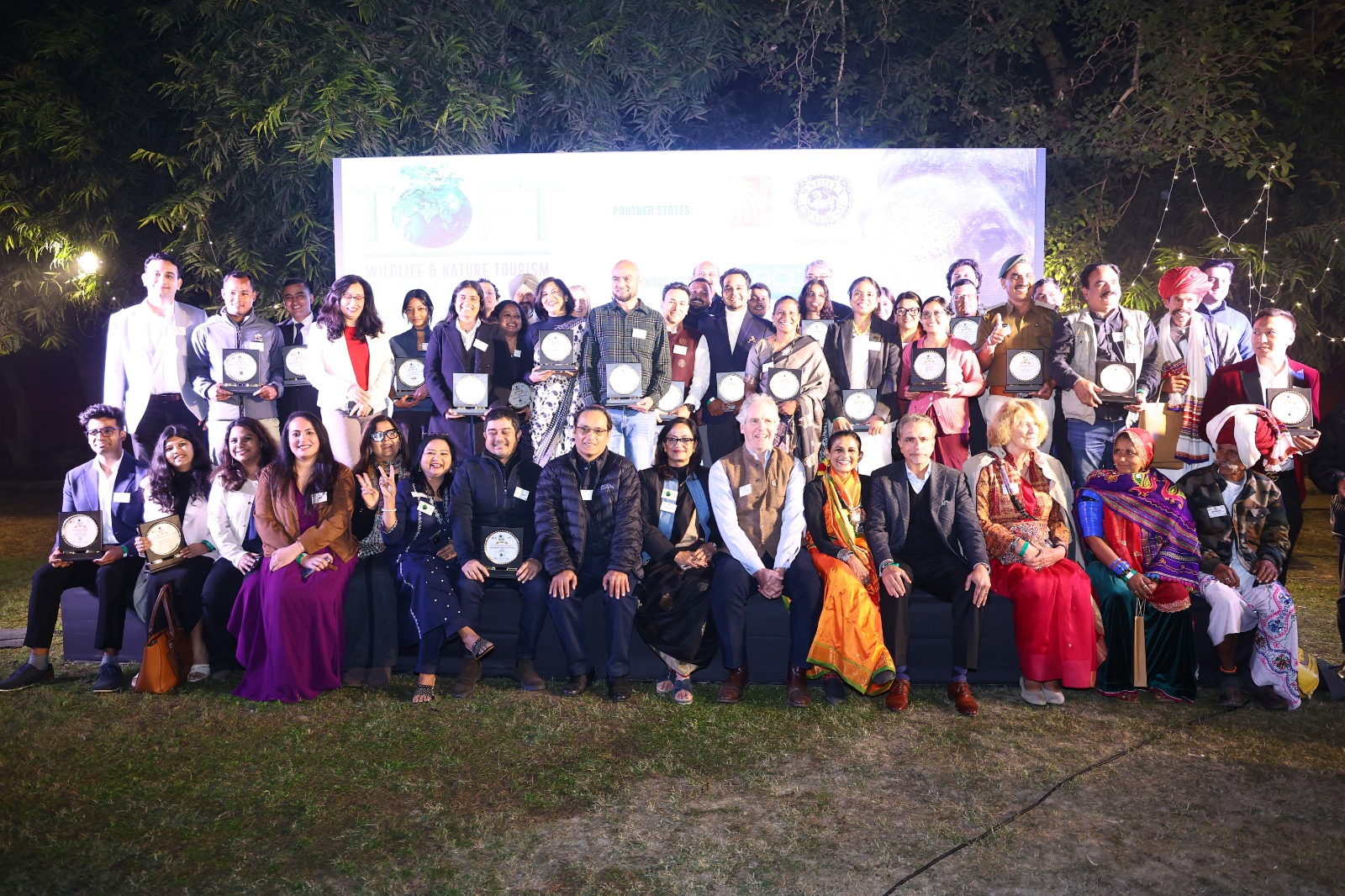
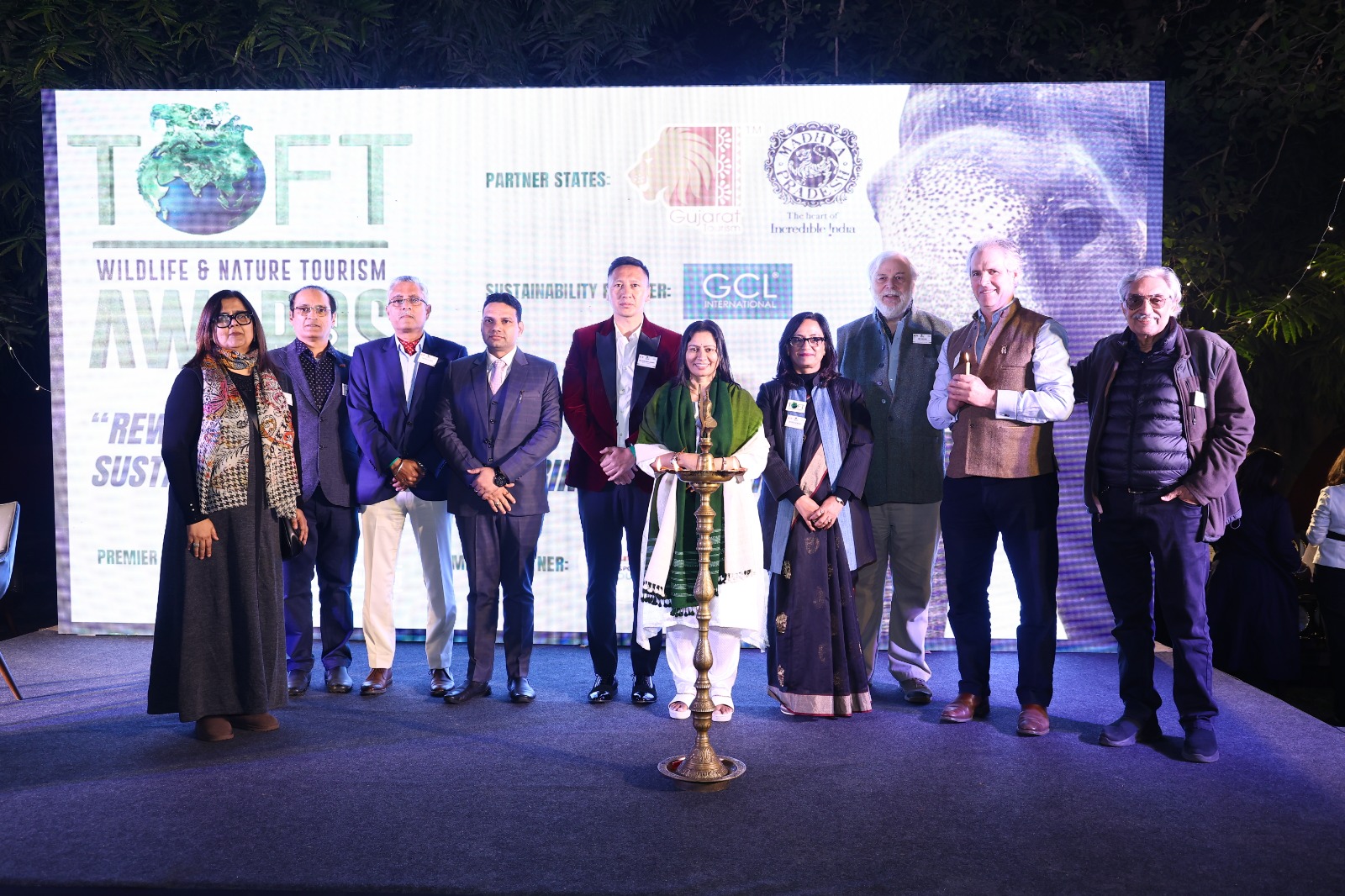
TOFT hosted the 8th Annual TOFT Wildlife & Nature Tourism Awards at Bikaner House, New Delhi, bringing together leaders and changemakers shaping the future of sustainable travel across the Indian subcontinent. This year’s ceremony, themed “Rewilding Tourism: Sustaining Nature, Empowering Communities,” honoured exemplary efforts in conservation-focused tourism and recognised those setting new benchmarks for regenerative, nature-positive practices.
The evening brought together state tourism officials, conservationists, industry experts, lodge owners, naturalists, community enterprises, photographers, and responsible travel advocates, united by a shared mission to ensure that tourism contributes directly to protecting wildlife, restoring habitats, and uplifting local communities.
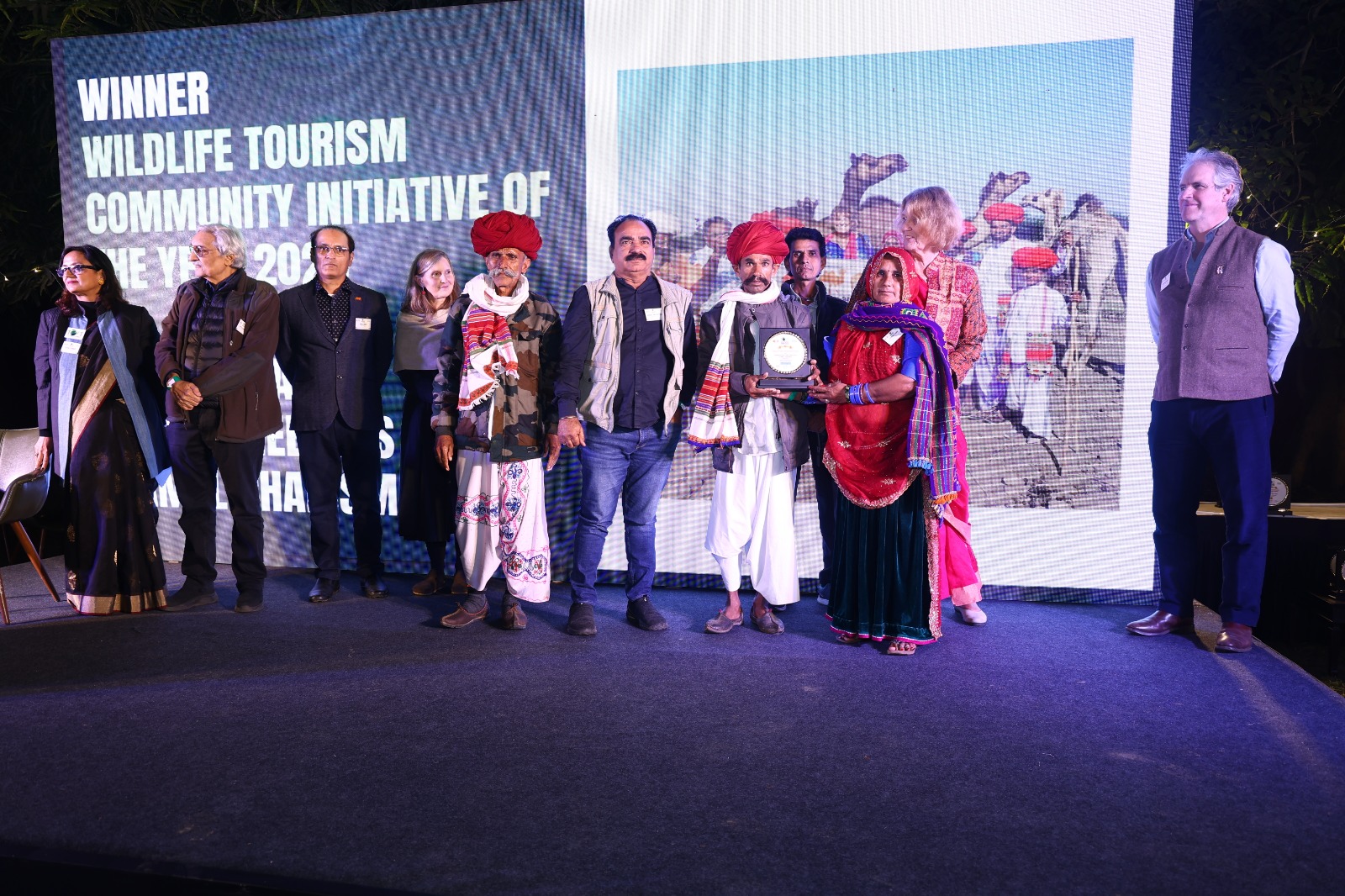
From pioneering sustainability innovations to community-driven conservation models, the 2025 finalists and winners demonstrated how well-managed nature tourism can act as a powerful force for ecological restoration, rural livelihoods, and long-term stewardship of India’s natural heritage.
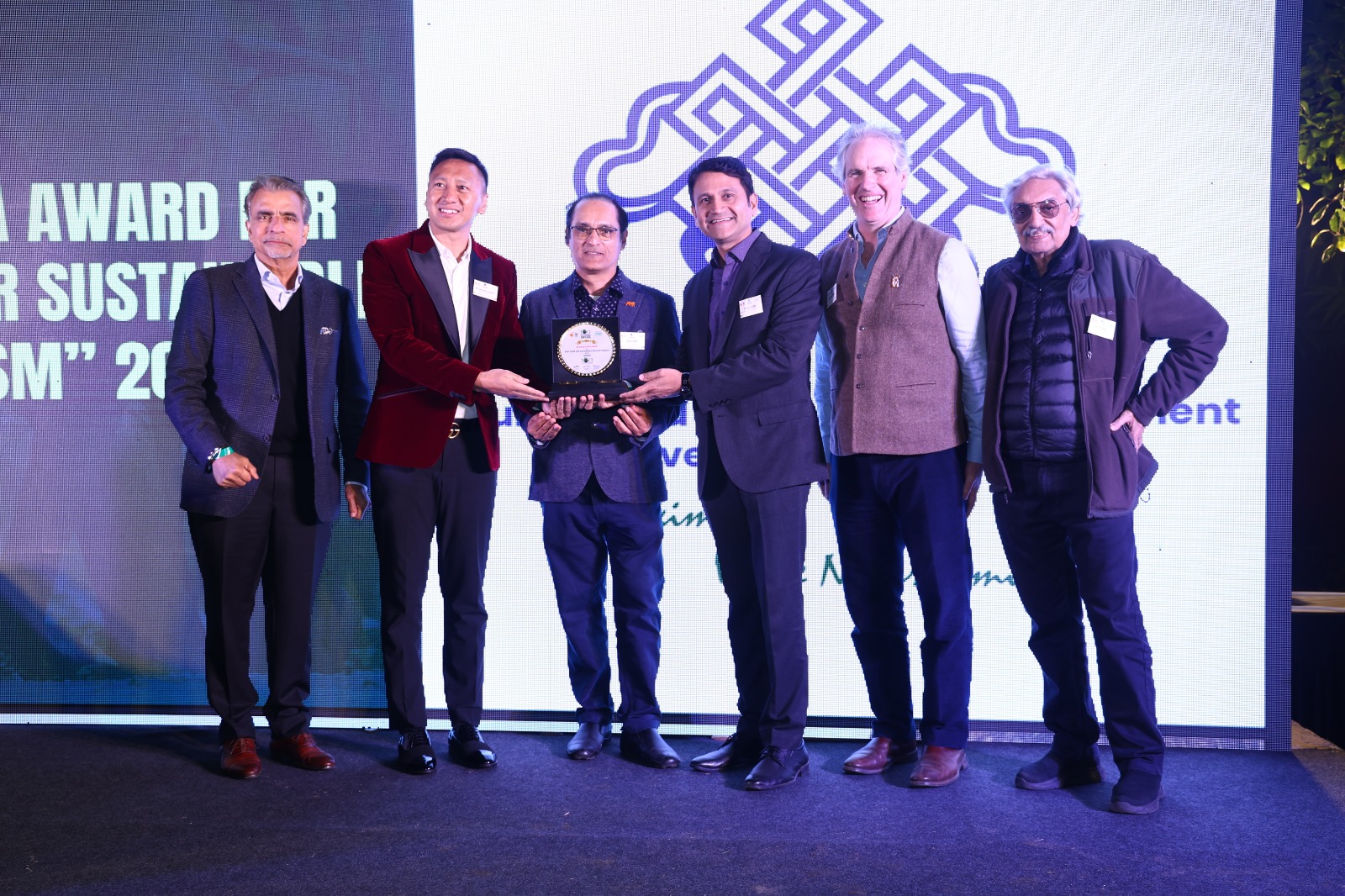
Established in 2010, the TOFT Wildlife Tourism Awards have grown steadily in prominence and industry impact, providing meaningful recognition to organisations and individuals demonstrating excellence in sustainable tourism. By honouring these leaders, TOFT aims to inspire wider adoption of responsible practices that protect wildlife, safeguard natural habitats, and build resilient ecosystems across the country.
The ceremony featured Bittu Sahgal, Editor of Sanctuary Asia and Founder of the Sanctuary Nature Foundation, as the Keynote Speaker. In his address, he underscored the critical role of responsible tourism in strengthening conservation awareness, supporting local livelihoods, and fostering long-term ecological stewardship. A part of his speech was devoted to remembering the late Valmik Thapar, one of India’s most respected wildlife conservationists, whose legacy continues to inspire the conservation community. Drawing from over four decades of experience, Sahgal reminded the audience that forests, wildlife, and the communities that protect them are life-support systems for our collective future.
Reflecting on lessons from Gir and other wilderness landscapes across India, he emphasised that climate instability poses one of the greatest threats to both wildlife and human wellbeing, urging the tourism and conservation community to champion models that restore ecosystems, reduce pressure on natural habitats, and reconnect younger generations with India’s natural heritage.
Sahgal’s keynote reinforced a shared message: that the choices we make today in tourism, conservation, and land use will shape the future of India’s forests, wildlife, and the communities intertwined with them.
Follow BOTT on LinkedIn, Facebook, Twitter & Instagram
Subscribe BOTT Channels on WhatsApp & Telegram to receive real time updates